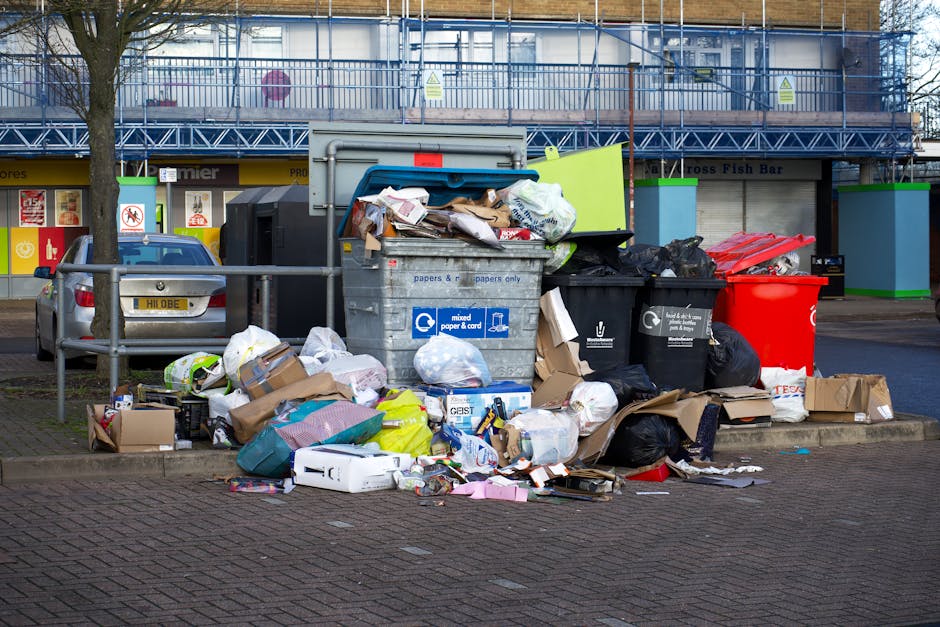
Oxted rubbish removal guide for High Street residents
If you live or work along Oxted High Street, rubbish has a habit of building up faster than you expect. One delivery box turns into three, a broken chair waits in the corner, and suddenly the spare room, shop back area, or flat hallway feels a bit cramped. This Oxted rubbish removal guide for High Street residents is here to make the whole process clearer, calmer, and a lot less fiddly.
The aim is simple: help you understand what rubbish removal involves, how local clearance services usually work, what to watch out for, and how to choose the right option for your situation. Whether you are clearing a home, a flat, a garage, a shop storeroom, or just a stubborn pile of mixed waste, a bit of planning saves time and stress. Truth be told, it also saves you from making the classic "I'll deal with it later" mistake. Later tends to arrive with more bags.
Along the way, we'll cover practical steps, best practices, common pitfalls, and a simple checklist you can use before booking a collection. If you want a broader service overview while reading, it may also help to look at general waste removal options in Oxted or the main house clearance service for larger domestic jobs.
Quick takeaway: the best rubbish removal plan for High Street residents is the one that matches your type of waste, access constraints, and timing needs without overcomplicating the job.
Why Oxted rubbish removal guide for High Street residents Matters
High Street living brings convenience, foot traffic, and a certain buzz. It also brings practical headaches that suburban driveways simply don't have. Access can be tighter, parking can be awkward, and waste may need to be moved down stairs, through shared entrances, or out of a busy shop front without causing a nuisance. That means rubbish removal is not just about "getting rid of stuff". It is about doing it in a way that fits the space, the neighbours, and the schedule.
For residents, landlords, shop owners, and flat occupiers, a tidy, organised clearance can make a real difference to day-to-day life. It can free up space before a move, help prepare a property for sale or letting, or just get rid of the low-level clutter that quietly drains energy. In our experience, that last one matters more than people think. A clear hallway or back room changes the mood of a place. You notice it straight away.
There is also a trust side to this. Waste must be handled properly, and responsible disposal is part of doing things the right way. Many people searching for rubbish removal in Oxted are really looking for reassurance: will it be collected promptly, will it be taken away legally, and will I have to lift everything myself? Those are fair questions.
If the job involves a larger property or a full reset, you may find the broader home clearance service useful. For smaller shared properties, flat clearance can be the more sensible fit, especially where stairs, narrow corridors, or limited parking are part of the picture.
How Oxted rubbish removal guide for High Street residents Works
At its simplest, rubbish removal follows a few clear stages: identify the waste, decide what needs to go, arrange collection, and make sure everything is taken to the right destination. The details vary, of course, but the process is usually more straightforward than people expect.
1. Identify the waste type
Not all waste is the same. A broken sofa, a few black bags of general clutter, old office paperwork, garden trimmings, and builders' rubble all need different handling. Some items are bulky. Some are heavy. Some need special treatment. It helps to separate your waste before collection day, even if only loosely.
2. Assess access and volume
High Street properties often have limited loading space. The collection team may need to work around shared entrances, on-street parking, or upper-floor access. Knowing whether the job is one sack, a few items, or a full van load helps determine the right service. A quick photo set can be surprisingly useful here; five photos often explain more than a long message.
3. Get a quote or estimate
Reliable providers usually ask for item descriptions, approximate volume, and any access issues. If you need a more tailored collection, the team may also ask about timing, lifting requirements, or whether the waste includes furniture, appliances, or construction debris. If you are dealing with mixed furniture and general waste, you might also look at furniture clearance or furniture disposal depending on what exactly needs removing.
4. Schedule the collection
Timing matters. A High Street pickup may need to avoid busy periods, shop opening hours, school runs, or delivery windows. Some residents prefer a same-day or next-day arrangement when space is tight. Others book ahead for a planned declutter. Either way, a good schedule keeps the job smooth and avoids awkward back-and-forth.
5. Collection and disposal
Once on site, the team removes the waste, loads it safely, and arranges disposal through the appropriate channels. For larger or mixed loads, items may be separated for reuse, recycling, or disposal depending on their condition and category. A straightforward waste removal service should make this feel tidy rather than chaotic. That's the goal.
Key Benefits and Practical Advantages
The main benefit is obvious: you get your space back. But there are several smaller advantages that often matter just as much.
- Less stress: no need to borrow a van, beg a friend for help, or make endless trips to a tip.
- Safer lifting: heavy furniture and awkward waste can be removed with fewer risks.
- Better time use: one collection can replace a full afternoon of loading, queuing, and unloading.
- Cleaner presentation: useful for letting agents, landlords, sellers, shop owners, and anyone wanting a decent first impression.
- Local convenience: High Street access issues are easier to manage when the service is planned around them.
- Responsible disposal: a proper service reduces the chance of fly-tipping or bad disposal habits, which nobody wants near their doorstep.
There is also a quiet mental benefit that's easy to underestimate. Clutter doesn't just sit there; it sits in your head a bit too. A cleared room, shelf, or yard can make the whole property feel lighter. Maybe that sounds dramatic. But it's true enough.
For outdoor waste, especially if you are clearing plant cuttings, soil, or broken garden furniture, garden clearance can be a better fit than a general rubbish collection. If the issue is a stuffed shed or overfull storage space, garage clearance is often the more practical route.
Who This Is For and When It Makes Sense
This guide is relevant to a wide mix of people on or near Oxted High Street. You may be a homeowner, tenant, landlord, shop owner, office manager, tradesperson, or someone helping a parent clear a property. The common thread is simple: there is waste to move, and you want it handled efficiently.
Typical situations where rubbish removal helps
- Moving out of a flat or maisonette with items that won't fit in your car
- Clearing old furniture after a room refit
- Removing packaging, offcuts, or rubble after a small renovation
- Emptying a loft, garage, or spare room that has become a storage catch-all
- Tidying up after a garden project or seasonal cutback
- Dealing with business waste from a shop, office, or back-room stock area
If you are a business owner, the pace is often the issue. A cluttered stockroom or back office can get in the way of trading, and nobody wants rubbish blocking deliveries. For those cases, business waste removal or office clearance may be a more precise match.
If you're thinking, "Can't I just do this myself?" the answer is sometimes yes, but not always sensibly. A couple of bags? Fine. A sofa, a mattress, broken shelving, and a pile of old tiles? That's a different story. Let's face it, a badly planned DIY removal can turn a simple job into a Saturday that disappears into the void.
Step-by-Step Guidance
If you want a clean, low-stress rubbish removal process, follow a method. It keeps the job manageable and reduces the chance of missing items or booking the wrong service.
Step 1: Walk the property and list everything
Start with a quick room-by-room sweep. Don't overthink it. Just note bulky items, loose bags, broken furniture, and anything that is awkward, heavy, or potentially restricted. If the waste spans more than one area, make sure you include hallways, cupboards, lofts, and outside storage spaces too.
Step 2: Separate items into simple categories
Use broad groups such as furniture, general household rubbish, garden waste, construction debris, and electrical items. You do not need to become a sorting wizard. But a rough split saves time and helps the clearance team plan properly.
Step 3: Check what needs special handling
Some items need extra care, especially electricals, hazardous materials, or anything that might be too heavy or awkward to move safely. If you are unsure, ask before collection rather than finding out on the day. That tiny bit of checking prevents a lot of hassle.
Step 4: Take photos and measure access
On a busy High Street, access can matter more than quantity. Take photos of stairwells, entrances, tight corners, or anything likely to slow movement. If there is parking only on one side of the road, mention that too. Clear information leads to better planning.
Step 5: Book the most suitable service
Match the job to the service. For example, builders' waste clearance is the obvious choice after refurbishment work, while loft clearance suits upper-level storage cleanouts. Choosing the right service usually improves timing, price clarity, and the overall experience.
Step 6: Prepare the area
Move small personal items out of the way, clear a route to the waste, and make sure the team can get in and out without confusion. If you live in a shared building, let neighbours know if necessary. A small heads-up avoids those slightly frosty hallway moments.
Step 7: Confirm final details before collection
Check timing, access notes, and what will happen if extra items appear. A quick confirmation call or message can stop misunderstandings. It's a simple thing, but useful.
Expert Tips for Better Results
Experienced clearance work is rarely glamorous, but a few good habits make a massive difference.
- Photograph everything before the collection: useful for quote accuracy and for your own records.
- Label anything you want to keep: especially in mixed loft or garage clearances where items can blur together.
- Group heavy items near the exit: only if it is safe to do so and does not block walkways.
- Be realistic about volume: what looks like "a few bags" can become half a van once stacked.
- Ask about recycling and reuse: it is often better for furniture and usable household items.
- Plan around traffic and delivery times: High Street collections can be smoother in off-peak windows.
A small but useful point: if you are clearing an office, keep paperwork and electronics separate from general rubbish where possible. That makes the process tidier and can reduce the chance of important items being mixed into a load. For workplaces, commercial waste support can be more suitable than a one-off household collection.
If furniture is the main issue, don't bury it under random bags first. Put the big pieces on your mental list before the smaller clutter. It sounds obvious, but a lot of people do the reverse and then wonder why the quote changes. Happens all the time.
Common Mistakes to Avoid
Rubbish removal tends to go wrong in predictable ways. The good news is that they're easy to avoid once you know them.
Leaving everything until the last minute
People often wait until the day before a move, inspection, or handyman visit. Then the waste is all mixed together, access is poor, and the pressure is higher. Earlier planning almost always gives you better options.
Mixing restricted items with general waste
Not every load can be treated the same way. Mixing odd items into a general pile without checking can complicate collection. If you are unsure, mention the item type in advance rather than assuming it will be fine.
Underestimating parking or access
On the High Street, this one matters. A service may be able to collect your waste, but if loading is difficult or parking is tight, the job can take longer than expected. That affects the day, sometimes the price, and definitely the mood.
Forgetting about shared spaces
In flats or converted buildings, hallways, stairwells, and entrances are often shared. Protecting these spaces is part of good clearance practice. A quick sweep before and after the collection helps keep things tidy.
Choosing a service that is too broad or too narrow
If you need a house-level clearance but only book a single-item collection, you may end up arranging a second visit. If you only need a couple of chairs removed, a massive all-day service may be unnecessary. Match the job properly.
Tools, Resources and Recommendations
You do not need special equipment for most rubbish removal jobs, but a few basic tools make the process smoother.
- Strong bin bags and boxes: for separating loose waste and small items.
- Marker pen and labels: for keeping "keep", "donate", and "remove" items distinct.
- Gloves: sensible for dusty lofts, old garages, and garden waste.
- Phone camera: use it for photos, access notes, and item lists.
- Tape measure: helpful for doors, stair turns, and bulky furniture.
- Basic cleaning cloths: good for a quick sweep after the clearance.
For bigger clearances, it can help to think in layers. First remove what is obviously going. Then deal with what needs sorting. Then revisit the forgotten corners, because there is always a forgotten corner. Behind a wardrobe, under a bench, in the loft hatch area... those places tend to hide things.
If the job involves a single large item such as a sofa, wardrobe, or bed frame, a focused furniture collection may be all you need. For more complex domestic clearances, the broader furniture clearance service can sit neatly alongside a full house or home clearance approach.
Law, Compliance, Standards, or Best Practice
Waste removal in the UK should always be handled responsibly. You do not need to be an expert in environmental regulation to make sensible decisions, but you should be careful about who collects your rubbish and where it ends up.
Best practice usually includes:
- using a provider that handles waste lawfully and responsibly
- keeping clear records of what was removed if you are a landlord or business
- separating items where practical, especially if there are electricals, furniture, or construction materials
- avoiding illegal dumping or passing waste to anyone who cannot explain how it will be dealt with
If you are a business, your obligations may be more structured than a domestic clearance. Office waste, stock, packaging, and refurbishment debris should be managed carefully. It is usually sensible to choose a service that understands office clearance and builders' waste clearance where relevant, especially if the site has mixed waste streams.
Householders and landlords should also be cautious about fly-tipping risks. If someone offers a suspiciously cheap collection and cannot clearly explain disposal, that is not a bargain. That is a problem waiting to happen. Better to be slightly boring and properly legal than "cheap" and regretful.
Options, Methods, or Comparison Table
Residents on Oxted High Street usually have a few different routes for getting rid of rubbish. The right choice depends on volume, urgency, access, and the type of waste involved.
| Option | Best for | Pros | Limitations |
|---|---|---|---|
| DIY tip run | Small amounts of general waste | Useful for light jobs; direct control over timing | Time-consuming, parking/loading hassle, not ideal for bulky items |
| Booked rubbish removal | Mixed household waste, bulky items, limited access | Convenient, faster, less lifting for you | Needs accurate description and scheduling |
| Specialist clearance service | Flats, lofts, garages, offices, builders' waste | Better fit for complex or larger jobs | May be more detailed to arrange |
| Item-specific disposal | One sofa, one mattress, one fridge, similar items | Simple for isolated items | Not always cost-effective for mixed loads |
In practice, most High Street residents want the second or third option. They need a collection that can deal with access, lifting, and mixed waste without turning the day into a logistics puzzle. Fair enough, really.
Case Study or Real-World Example
Here is a typical scenario. A resident in a High Street flat has a broken armchair, several boxes from a recent move, an old bedside cabinet, and a few bags of general clutter that have been sitting in a corner for months. The hallway is narrow, parking is tight, and the building has shared access.
Rather than trying to squeeze everything into a car in multiple trips, they photograph the items, note the floor level and access, and book a clearance suited to a flat setting. The team arrives with the right kit, removes the bulky furniture first, then clears the smaller bags and boxes. Because the resident had already separated a couple of personal items and checked the route in advance, the whole job goes more smoothly than expected. No drama, no last-minute panic, just a cleared room and a proper sense of relief.
That kind of outcome is common when the job is planned properly. The work itself is not complicated. The difference is in preparation.
Practical Checklist
Use this checklist before arranging rubbish removal on or near Oxted High Street.
- List the items you want removed
- Separate what must stay from what can go
- Identify any bulky, heavy, or awkward pieces
- Check whether the waste includes furniture, garden waste, builders' waste, or office items
- Take a few clear photos
- Note access issues, stairs, parking, or loading restrictions
- Decide whether you need a flat clearance, garage clearance, loft clearance, or a broader home clearance
- Confirm timing and any special instructions
- Protect shared areas if you live in a communal building
- Double-check that no personal documents or valuables are mixed in
Useful reminder: if the waste is mostly one category, choose the service that fits that category. It usually makes everything simpler.
Conclusion
Rubbish removal for Oxted High Street residents does not need to be complicated. Once you know what needs clearing, how access works, and which type of service suits the job, the whole process becomes much easier to manage. A little planning goes a long way. It saves time, reduces stress, and helps you avoid the common mistakes that make a simple clearance feel oddly exhausting.
Whether you are dealing with an overfilled flat, a cluttered garage, a loft that has become a time capsule, or a business back room that needs a fresh start, the right approach is the one that is practical, safe, and properly organised. If you are comparing options, start with the service that matches your waste type, then think about access and timing. That order matters more than people think.
And if you are standing in front of a pile of stuff wondering where on earth to begin, start small. One corner, one shelf, one bag. That's often enough to get the momentum going.
Get a free quote today and see how much you can save.
Frequently Asked Questions
What counts as rubbish removal for a High Street property?
It usually covers the collection and disposal of unwanted household, commercial, or bulky items from a property. That can include general clutter, old furniture, bags of waste, garden debris, office items, and some renovation waste depending on the service.
Is rubbish removal better than doing a tip run myself?
For small amounts, a DIY tip run can work. For bulky furniture, awkward access, or mixed waste, a booked collection is often easier and less stressful. You avoid lifting, loading, parking issues, and multiple trips. That alone can make it worthwhile.
How do I know which service I need?
Match the service to the main type of waste and the space you are clearing. For example, garage clearance suits storage areas, loft clearance suits upper storage spaces, and builders' waste clearance fits renovation debris.
Can rubbish removal deal with furniture?
Yes, in many cases. Sofas, tables, chairs, wardrobes, and other bulky pieces are often collected as part of a furniture-specific or mixed clearance service. If you only have furniture, a dedicated furniture removal option may be the cleanest fit.
What if I live in a flat above the High Street?
That is very common, and it usually just means access needs a little more planning. Stairs, shared entrances, and parking can affect timing, so give clear details when booking. A flat clearance service is often the most suitable choice.
Do I need to sort everything before the collection?
Not always, but some basic sorting helps. Separate obvious keep items, valuables, and anything that may need special handling. Even rough categories make the process smoother and reduce mistakes on the day.
How far in advance should I book?
That depends on urgency and availability. If you are working to a moving date or property deadline, book as early as you can. If the space is urgent or very cluttered, ask whether faster collection is possible.
What happens to the waste after collection?
It should be taken away for lawful disposal, recycling, or other appropriate handling depending on the material. A good provider will be clear about how the waste is managed and will not leave you guessing.
Is rubbish removal useful for businesses as well as homes?
Yes. Shops, offices, landlords, and small commercial premises often need help with waste, old stock, furniture, or equipment. For that, business waste removal or office clearance can be especially relevant.
Can you remove garden waste and outdoor clutter too?
Yes, if the service covers it. Branches, cuttings, old plant pots, broken patio items, and general outdoor clutter are often handled through garden clearance. It is worth mentioning muddy or bulky items in advance.
What should I ask before booking a collection?
Ask what types of waste are accepted, how access should be prepared, whether lifting is included, and how pricing is estimated. It also helps to ask whether the team can handle furniture, garden waste, or builders' debris if your load is mixed.
Where can I learn more about the company behind the service?
You can review the company background on the about us page and check service details or make an enquiry through the contact page. If you want to understand website terms or data handling, the privacy policy and terms and conditions are there as well.
Sometimes the best clearance job is the one that simply removes a burden from your day and gives the space back to you. Quietly, cleanly, and without fuss.