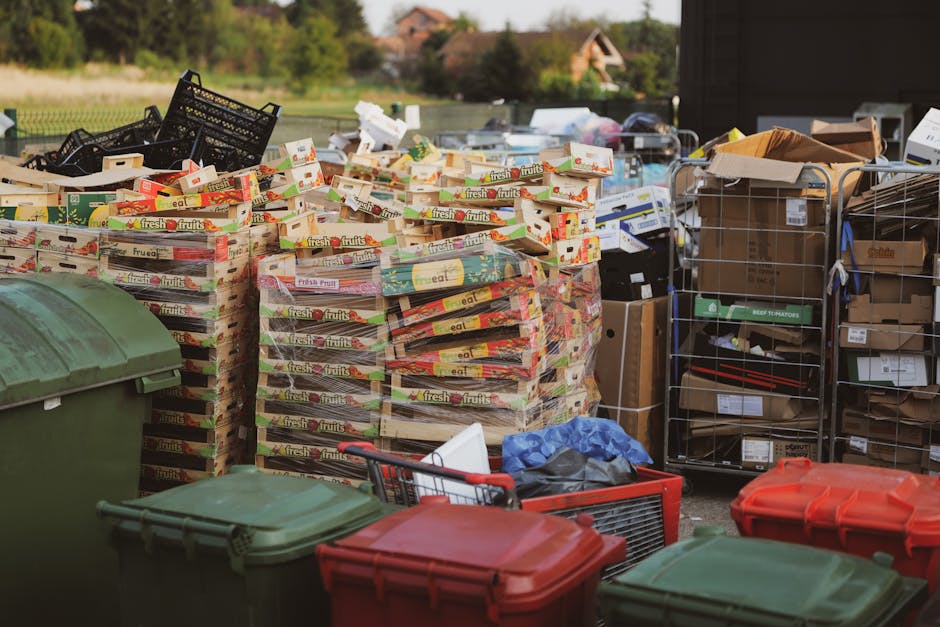
Rubbish removal for Oxted businesses local trade waste solutions
If you run a business in Oxted, you already know rubbish has a habit of appearing at the worst possible moment. One busy week, and suddenly the stockroom is cluttered, the office bins are overflowing, or the back yard has become a half-hidden dumping ground for packaging, broken furniture, and offcuts. Rubbish removal for Oxted businesses local trade waste solutions is really about getting that under control in a way that is efficient, compliant, and not a pain in the neck.
This guide walks through how local trade waste solutions work, who they suit, what to watch out for, and how to choose a service that fits the reality of running a business. Not theory. Practical stuff. The kind that helps you keep your premises cleaner, your team happier, and your day a bit less chaotic.
Why Rubbish removal for Oxted businesses local trade waste solutions Matters
Business waste is not just a housekeeping issue. It affects how your premises look, how safely people move around, how well your team works, and how customers judge you the second they step through the door. In a place like Oxted, where many businesses rely on repeat custom, recommendations, and a decent first impression, that matters more than people sometimes admit.
A tidy site can make an immediate difference. You notice it in a reception area that feels organised rather than cramped, in a cafe yard that does not smell vaguely of old cardboard, or in an office corridor where nobody has to sidestep a stack of broken desks. It is one of those unglamorous things that quietly supports everything else.
There is also a practical side. Trade waste that is left to build up can create fire risks, attract vermin, block access routes, or cause avoidable slips and trips. That sort of thing is expensive in the widest sense, because it eats time as well as money. And let's face it, nobody starts a business hoping to spend Friday afternoon wrestling with bin bags.
For many local firms, the most sensible answer is a structured business waste removal arrangement rather than ad hoc trips to a skip or an endless pile of bags in the back alley. If your waste stream is mixed, irregular, or simply too much for your internal team to manage, a service such as business waste removal gives you a straightforward way to keep on top of it without turning the whole thing into a mini project every week.
How Rubbish removal for Oxted businesses local trade waste solutions Works
In plain English, the process usually starts with an assessment of what kind of waste you have, how much of it there is, and how often it builds up. A small office with a few bags of shredded paper and packaging will need something different from a renovation contractor with rubble, timber, and old fixtures to clear.
Once the waste type is understood, the collection method can be matched to the site. That might mean a one-off clear-out, a scheduled collection pattern, or a mixed approach where general waste is handled separately from heavier trade waste. The key is fit. The wrong setup tends to create friction, and friction is what turns a simple service into a headache.
A typical trade waste removal flow looks like this:
- Identify the waste streams on site.
- Separate reusable, recyclable, and general rubbish where possible.
- Agree the volume and collection timing.
- Prepare access points and loading areas.
- Remove the waste safely and sort it for the appropriate route.
- Keep records where needed and review the setup if your needs change.
That may sound basic, but basic done well is usually what keeps operations smooth. The best systems are almost boring. No drama, no last-minute panic, no overflowing bins by Thursday morning.
For sites with mixed debris, a broader waste removal service can be helpful, especially where you need flexibility rather than a single rigid collection type. If your premises also involve fit-outs or refurb work, it can be useful to combine this with builders waste clearance so heavier construction debris is handled properly rather than mixed in with regular business rubbish.
Key Benefits and Practical Advantages
The biggest benefit is obvious: you get rubbish out of the way. But the real value goes deeper than that.
- Cleaner premises: Better presentation for staff, customers, visitors, and inspectors.
- Safer working environment: Less clutter means fewer trip hazards and blocked walkways.
- More efficient operations: Staff spend less time managing waste and more time doing actual work.
- Improved storage use: Back rooms, yards, and service corridors stay usable.
- Better recycling discipline: Waste is easier to sort when collection is planned.
- Less stress during busy periods: Seasonal peaks, office moves, and refurbishments are easier to manage.
There is also a quieter benefit that many businesses only notice after the fact. A clean, organised environment tends to change how people behave. Staff are more careful. Customers are less distracted. The whole place feels a bit more under control, which, to be fair, is not a bad feeling when things are busy.
For businesses dealing with old stock, damaged fixtures, or unnecessary furniture, it can also make sense to combine routine trade waste with one-off clearance work. If that sounds familiar, services such as office clearance and furniture disposal can be relevant when you are clearing a workspace, replacing seating, or removing broken equipment that is just taking up room.
Expert summary: The best rubbish removal solution is not the cheapest one on paper; it is the one that keeps your site compliant, predictable, and easy to run week after week.
Who This Is For and When It Makes Sense
This kind of service suits a wide range of Oxted businesses. You do not need to be a large company to benefit. In fact, smaller firms often feel the pinch more because they have fewer hands on deck and less spare space.
It is especially useful for:
- shops and retail units dealing with packaging and delivery waste
- cafes, takeaways, and food businesses managing front-of-house and back-of-house waste
- offices that generate paper, card, furniture, or IT-related clutter
- landlords and letting agents overseeing end-of-tenancy clear-outs
- builders, decorators, and tradespeople with ongoing site debris
- warehouses and light industrial units with pallets, wrap, and general trade waste
- businesses going through a refit, relocation, or seasonal reset
It also makes sense if your waste pattern changes often. Perhaps one month is quiet and the next is packed with stock deliveries, packaging, broken items, and the leftovers from a small revamp. That is where flexible local trade waste solutions earn their keep.
And if your business has additional clearance needs outside the main workplace, you may also find related services useful. For example, some business owners use garage clearance to deal with overflow storage, or loft clearance when they are reclaiming archived space above commercial premises. Slightly odd corner of the building, perhaps, but very often full of forgotten stuff.
Step-by-Step Guidance
If you want to approach rubbish removal sensibly, start with the waste itself and work backwards. That sounds obvious, but people often jump straight to price before they know what they actually need.
1. Walk the site and identify the waste
Look at what is piling up and where. Is it mainly packaging? Office furniture? Mixed rubbish? Heavy debris? Green waste from an external area? A rough picture is enough to begin with, but it should be honest. Underestimating waste is how collection plans go sideways.
2. Separate waste into practical categories
Keep recyclables apart where possible. Cardboard, paper, timber, metal, and general rubbish should not all be treated the same if there is a better route available. Sorting is easier at source than after everything has been dumped in one heap.
3. Decide on collection frequency
Some businesses only need a one-off clearance. Others benefit from regular pickups. If you are constantly storing waste because collections are too infrequent, the system is not really working.
4. Make access simple
Clear loading points, unlock gates, label what goes, and tell staff what should not be touched. A few minutes of preparation can save a lot of confusion on the day.
5. Check the provider's process
Ask how waste is handled, whether recyclable material is separated, and what proof or paperwork is provided where needed. A trustworthy provider should be able to explain the process without sounding vague or defensive.
6. Review after the first collection
After the first job, take ten minutes to ask what worked and what didn't. Was there enough space? Were there items you should have removed separately? Did the collection timing suit your opening hours? This sort of review sounds small, but it improves the next visit immediately.
If the job is part of a larger property cleanout, it can help to look at related clearance services too. A business fitting out a new workspace may want to compare office clearance with general trade waste handling, while a company dealing with a mix of domestic and commercial items might need support from house clearance style services for staff accommodation or mixed-use premises. Different problem, same need: get things out safely and properly.
Expert Tips for Better Results
Here are a few things that make a surprising difference in real life.
- Label bins and holding areas clearly. If everyone knows what goes where, contamination drops fast.
- Keep walkways free. Waste should never block exits, fire routes, or delivery access. Never.
- Build waste into your weekly routine. If it is treated as an afterthought, it will behave like one.
- Choose collection times that suit trading hours. Early mornings often work well for busy premises.
- Use one person as the waste lead. Not because they should do all the lifting, but because someone needs oversight.
- Think ahead during refurbishments. Waste grows quickly when a project starts, and then it really grows.
A small but useful habit is to keep a quick note of what types of waste appear most often. After a month or two, patterns emerge. Maybe you are throwing away too much cardboard because deliveries are overboxed, or maybe old display units keep ending up in the wrong pile. That kind of insight helps you tighten the system without turning it into a full-time admin job.
If your business also handles outside spaces, you may find garden clearance helpful for patios, forecourts, or outdoor storage areas that pick up leaves, broken planters, and general debris. A smart-looking frontage does matter, even if it is only a small strip of paving outside the door.
Common Mistakes to Avoid
Most waste problems are not dramatic. They are just the result of a few small mistakes repeated for too long.
- Mixing everything together: This makes recycling harder and can increase disposal costs.
- Leaving collections too late: Overflow usually happens on the busiest day, naturally.
- Forgetting about access: A collection crew can only work with the space you give them.
- Assuming all waste is the same: It is not. Packaging, furniture, rubble, and mixed rubbish each need a different approach.
- Ignoring staff habits: If the team does not understand the system, it will drift.
- Choosing a provider on price alone: Cheap and cheerful is fine for coffee. Less so for waste handling.
One of the sneakiest problems is "temporary storage" that becomes permanent. A couple of bags in the corner, a broken chair waiting to be dealt with, a stack of old boxes, and suddenly you have a mini landfill by the photocopier. It happens. More often than people admit.
Tools, Resources and Recommendations
You do not need a complicated toolkit, but a few simple resources help enormously.
- Waste log: A basic sheet noting what is collected, when, and how much.
- Colour-coded bins or labels: Useful for keeping recyclables separate.
- Site access plan: Especially helpful for yards, shared entrances, or awkward loading points.
- Internal waste policy: Even a one-page guide can improve consistency.
- Photographs before clearance: Handy for planning and for avoiding misunderstandings.
For businesses handling bulky items or old stock, service pages such as furniture clearance can be a practical fit, especially when desks, shelving, chairs, or reception furniture need to go in one organised move. If you are replacing a lot of items at once, that is often the cleanest route.
And if your concern is more about the broader property than the waste alone, home clearance may be useful for mixed premises or staff accommodation where domestic items and business waste overlap. It is a niche situation, but not a rare one.
Law, Compliance, Standards, or Best Practice
Waste handling in the UK is not something to take casually. Business owners have duties around keeping waste controlled, stored safely, and passed to an appropriate carrier. The exact rules depend on the waste type and the circumstances, so it is wise to treat compliance as a live issue rather than a box-ticking exercise.
Good practice usually includes the following:
- using a reputable waste carrier
- keeping waste separate where practical
- storing waste safely and securely on site
- avoiding fly-tipping by never handing waste to an unknown operator
- keeping records or transfer information where appropriate
- making sure staff understand what can and cannot go into general rubbish
There is also a duty of care mindset behind all of this. In simple terms, if you produce the waste, you still need to think about where it ends up. That does not mean you need to become a compliance specialist overnight. It does mean asking the right questions before a collection happens.
Trust is a big part of this. A service provider should be clear about how they operate, how they handle different waste streams, and what measures they take around safety. Pages such as health and safety policy, insurance and safety, and recycling and sustainability are the kind of signals you want to review if you are checking whether a provider feels properly set up rather than vaguely organised.
For commercial clients, it also helps to read the small print. The terms and conditions and payment and security information can give useful clarity about what is included, how payments are handled, and what to expect if the job changes on the day.
Options, Methods, or Comparison Table
There is no one-size-fits-all answer. The right method depends on volume, access, waste type, and how often the rubbish appears.
| Method | Best for | Strengths | Limitations |
|---|---|---|---|
| Scheduled trade waste collection | Businesses with regular, predictable rubbish | Easy to manage, consistent, good for routine waste | Less flexible for one-off bulky items |
| One-off rubbish removal | Clear-outs, refits, end-of-project cleanups | Fast, simple, suited to irregular waste | Not ideal for ongoing weekly waste |
| Mixed waste removal | Premises with varied waste streams | Practical when different waste types build up together | Needs clear sorting and careful planning |
| Specialist clearance support | Offices, shops, garages, lofts, storage-heavy premises | Better for bulky or awkward items | May not suit simple bin-only needs |
For many Oxted businesses, the sweet spot is a blend. A regular waste routine for daily or weekly rubbish, plus a separate clearance option for bulkier items when needed. Simple. Flexible. No drama.
Case Study or Real-World Example
Here is a realistic example. A small professional office in Oxted starts the year with tidy bins and a decent filing system. Then a refurbishment begins. Old desks go out. A couple of awkward chairs get stored in a corridor "just for now." Packing materials pile up. The recycling point starts to overflow. Within two weeks, the place feels crowded and less professional.
Instead of trying to patch things together with random trips and internal effort, the business arranges a proper collection plan. First, the bulky items are cleared. Then the packaging and general waste are organised so the office can return to normal operations. The main change is not just that the rubbish disappears. It is that the team stops wasting time on it.
A similar pattern often happens in retail, where stock rotation and delivery packaging create constant clutter. Once the waste solution is matched to the way the business actually works, the whole site becomes calmer. Less scrambling, fewer half-finished piles, and fewer "we'll deal with that later" moments. Truth be told, later rarely helps.
Practical Checklist
Use this before arranging rubbish removal for your business.
- List the main waste types on site.
- Separate general rubbish from recyclable material where possible.
- Check whether any items are bulky, heavy, or awkward.
- Decide whether you need a one-off clear-out or regular collections.
- Confirm access times and loading points.
- Remove anything that should be handled separately.
- Make sure staff know what to leave out.
- Review safety risks such as blocked exits or slippery areas.
- Keep any relevant paperwork or notes in order.
- After collection, review what could be improved next time.
That list is not fancy, but it saves problems. A lot of problems, actually.
Conclusion
Rubbish removal for Oxted businesses local trade waste solutions is really about making business life smoother. When waste is handled properly, your premises look better, your team works more safely, and your day runs with fewer interruptions. That is not a luxury. It is one of those quiet operational basics that supports everything else.
The best approach is usually the one that fits your space, your waste pattern, and your working hours. Keep it practical, keep it safe, and do not let waste become the background issue that slowly gets on top of you. A little structure goes a long way.
Get a free quote today and see how much you can save.
If you are comparing options, the next sensible step is to look at the type of waste you produce, the space you are working with, and whether a simple collection plan or a broader clearance service will serve you best. A calm, tidy site has a way of making everything else feel more manageable, and that is a very good place to be.
Frequently Asked Questions
What counts as trade waste for a business in Oxted?
Trade waste is any rubbish produced by your business activity. That can include packaging, office waste, broken furniture, stockroom clutter, renovation debris, or mixed rubbish from day-to-day operations. The exact mix depends on the business, which is why a quick site review is so useful.
Do I need a regular collection or a one-off rubbish removal?
If your waste builds up steadily each week, regular collections usually make more sense. If you are clearing out after a move, refit, or one-off project, a single removal may be enough. Some businesses use both, which is often the neatest solution.
Can business waste include old office furniture?
Yes, but bulky items are usually better handled as part of a clearance rather than mixed in with everyday waste. Desks, chairs, shelving, and similar items can be grouped into a furniture clearance or office clearance approach if that suits the site better.
How do I choose a good local trade waste solution?
Look for clarity, not just price. You want a provider that explains how collections work, what happens to the waste, how safety is managed, and what is included. Straight answers are a good sign. Vague ones are not.
What happens if my business waste is mixed together?
Mixed waste can be harder to sort and may reduce recycling opportunities. It can also make the collection process less efficient. If possible, separate cardboard, paper, timber, metal, and general rubbish before collection.
Is rubbish removal suitable for small businesses?
Absolutely. Small businesses often benefit the most because space is tight and staff are busy. A simple, reliable solution can prevent clutter from taking over storage areas, back rooms, or entrances.
How often should I review my waste setup?
Review it any time your trading pattern changes, and at least after a busy period or refit. If you notice bins overflowing or waste gathering in the wrong place, that is your sign to adjust the setup sooner rather than later.
Can I combine rubbish removal with other clearance services?
Yes. Many businesses find it useful to combine trade waste handling with related clearance work such as builders waste clearance, office clearance, or furniture disposal. That keeps the process simpler when the site has more than one kind of waste issue.
What should I ask before booking a provider?
Ask what waste types they handle, how access should be prepared, whether they can deal with bulky items, and what their process is for sorting and disposal. You should also check practical details such as timing, payment, and site safety expectations.
Why does recycling matter in business waste removal?
Because it reduces the amount of material sent down the most basic disposal route and keeps your operation more efficient. It also shows your business is paying attention to how waste is handled, which matters to many customers and staff.
What if I also need to clear part of my property or storage area?
That is common. If waste is building up in a garage, loft, office, or other storage space, you may need a more tailored clearance approach. In those cases, services like garage clearance or loft clearance can be helpful alongside general rubbish removal.
How do I know whether a provider is trustworthy?
Look for clear policies, sensible communication, and practical detail. If a provider can explain their health and safety approach, insurance, payment handling, and sustainability practices without fuss, that usually tells you quite a lot. Trust is built in the details.